What Do Miniature Codices Tell Us About Early Christianity? #2

As I mentioned in a prior post, I am in the middle of a new 5-part series exploring what the phenomenon of miniature codices teaches us about the early Christian movement. This series is designed to draw out some practical implications (for a lay audience) from my new book with Oxford University Press, Miniature Codices in Early Christianity.
Having already done installment #1, we now turn to the second thing that miniature codices tell us about the early Christian movement. These tiny books demonstrate that early Christians may have engaged in private reading more often than we thought.
You Can’t Read!
In the 1979 film Rocky II, … Continue reading...
What Do Miniature Codices Tell Us About Early Christianity? #1
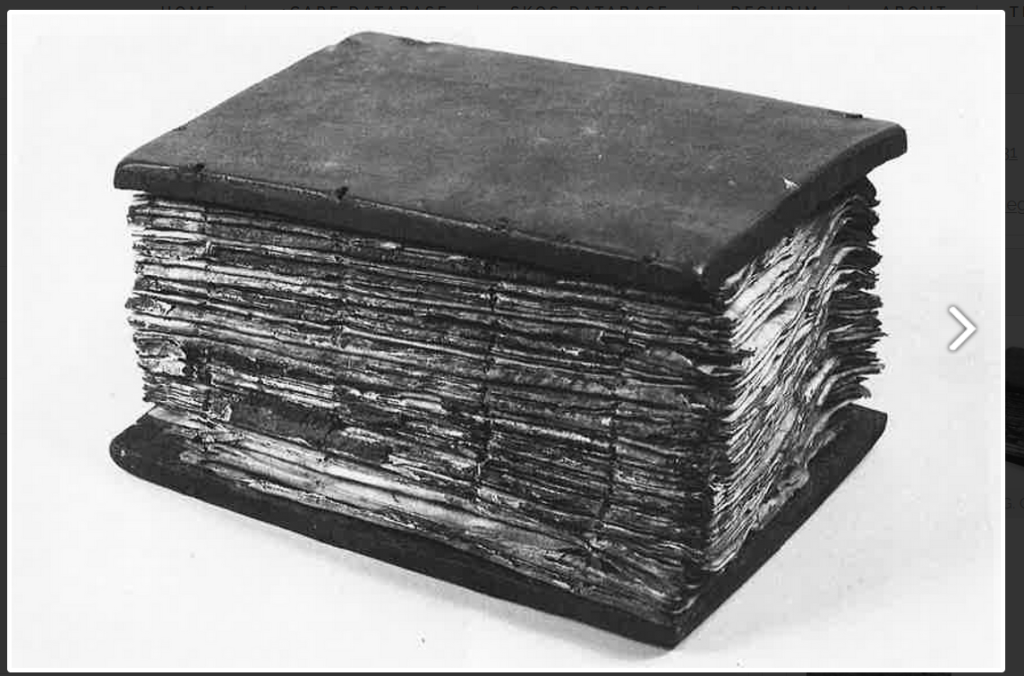
As I mentioned in a prior post, I am starting a new 5-part series exploring what the phenomenon of miniature codices teaches us about the early Christian movement. This series is designed to draw out some practical implications (for a lay audience) from my new book with Oxford University Press, Miniature Codices in Early Christianity.
By way of review (especially if you are just joining the series), miniature codices are basically tiny little books, “pocket Bibles” so to speak. As early as the second century, and especially in the fourth and fifth centuries, Christians began to create these little manuscripts that contained portions of Scripture (and also non-canonical … Continue reading...
New Series: What Do Miniature Codices Tell Us About Early Christianity?

As I mentioned in a prior post, my new book with Oxford University Press is now out in both the UK and US: Miniature Codices in Early Christianity. It’s part of Oxford’s long-standing Early Christian Studies series.
I have been working on the subject of miniature codices for more than twenty years now, ever since doing my thesis a while ago under Larry Hurtado on the apocryphal gospel fragment, P.Oxy. 840. I have also written on the miniature codex P.Ant. 12 (0232) which contains 2 John (see here), and a recent overview article on miniature codices in Paratextual Features in Early New Testament Papyri and Manuscripts, eds. … Continue reading...
How Many New Testament Manuscripts Do We Have from the Second Century?

“There is no second-century manuscript evidence.” —Helmut Koester
When it comes to the transmission of the New Testament text, the second century has been long recognized as a critical time period. And it is not hard to see why. If the New Testament books were written (more or less) in the first-century, then the extant manuscripts that get us closest to that time period will inevitably take on a level of significance.
The second century is also significant because of modern scholarly claims that it was precisely this period when the most serious textual corruptions were likely to have occurred, suggesting the earliest phases of transmission were marked by “textual … Continue reading...
Is the New Testament Historically Reliable? My Conversation with Rebecca McLaughlin

I recently was a guest on Rebecca McLaughlin’s podcast, Confronting Christianity. We had a fun time discussing a wide range of issues related to the historical reliability of the New Testament, even delving a bit into my forthcoming Oxford volume, Miniature Codices in Early Christianity. Enjoy!